From viewing to handover – this is what you can expect. You dream of a home in Morocco. Perhaps as a holiday home, as an investment or with a view to emigrating. The sun, the atmosphere, the affordable prices… the picture is right. But how does it actually work: buying a house in Morocco? The good news: the buying process is clear and well regulated legally – provided you follow the right steps and work with reliable local partners. In this blog we explain how it works, what always applies and what can differ per situation.
Step 1: Orientation and viewings
Just like in the Netherlands, the process starts with orientation. Where do you want to buy? What is your budget? Are you looking for a move-in-ready home or something to renovate? Together with local estate agents (who really know the market), you can view properties in popular cities such as:
- Tangier – International and modern
- Marrakech – Cultural and touristic
- Agadir – Sun, sea and surfing
- Tetouan and Martil – Affordable and quiet
At Mee naar Marokko we guide you through this, both remotely and during Real Estate Trips. Together we make sure you choose a home that suits your wishes and your plans.
Step 2: Negotiation and preliminary purchase agreement
Found a property? Then the negotiation follows. In Morocco this is often done directly with the seller or through a local estate agent. As soon as you agree on the price and conditions, a preliminary purchase agreement is usually drawn up: the promesse de vente. This is a binding agreement that states, among other things:
- The agreed price
- A description of the property
- Any conditions (such as financing, permits, completion date)
- The latest date of transfer
Note: the promesse is legally binding. That is why good guidance is essential when drawing up and understanding this contract.
Step 3: Checks by the notary and the land registry
From this point on the notary takes action – an important figure in the Moroccan buying process. Unlike in the Netherlands, the notary in Morocco checks the ownership situation personally and takes care of:
- Requesting the titre foncier (title deed)
- Checking that there are no mortgages or debts on the property
- Verifying the identity of the seller
- Registration in the land registry (the Conservation Foncière)
These legal steps apply throughout the country and make the buying process in Morocco reliable – provided the property is officially registered. Especially with older or rural properties, there may be uncertainty about the title. That is why it is so important to work with a reliable notary and a local guide.
Step 4: Payment and final transfer
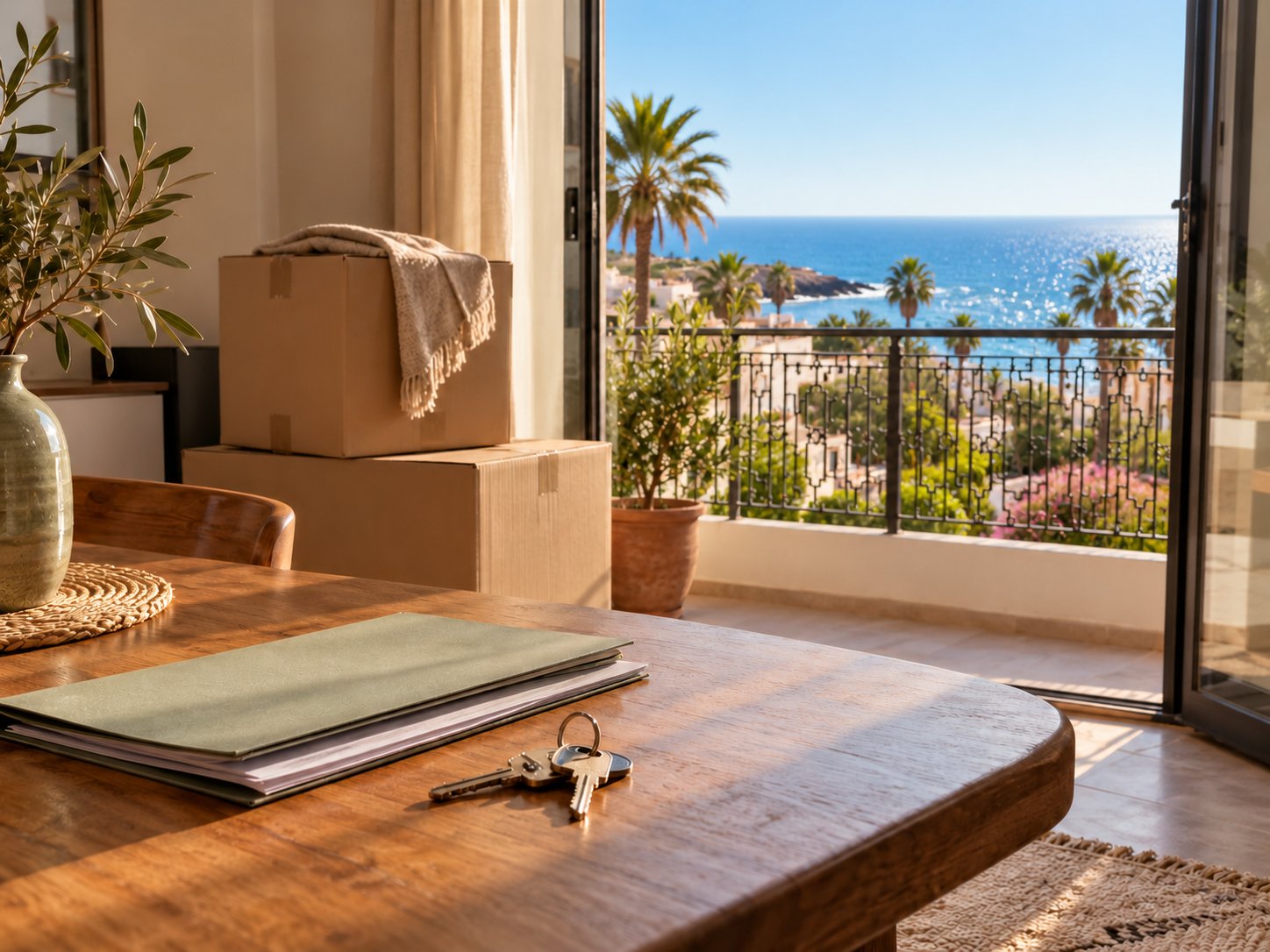
Have all documents been approved? Then the formal transfer follows. The notary draws up the acte de vente (final deed of sale). At that moment you pay the purchase price, usually through a Moroccan bank or a notary account. Then:
- Ownership is officially transferred to your name
- You receive a registration certificate from the land registry
- You can (finally!) get the keys
In some cases no promesse is signed in advance and the parties proceed directly to the final transfer. This happens, for example, with new-build projects or quick sales. That is also allowed, as long as all legal checks have been carried out.
Step 5: Registration and additional costs
In addition to the purchase price, you also pay costs for:
- Registration and transfer tax (± 4%)
- Notary fees (± 1 – 1.5%)
- Administration and land registry costs
- Any translation costs or legalisations
In total you should count on 6 to 8% in additional costs – lower than in Spain or France.
And after that?
You are now officially the owner of your home in Morocco – congratulations! But it doesn't end there. Many buyers choose to:
- Rent it out via Airbnb or Booking (with returns of 8–12%)
- Have the property managed by a local manager
- Partly renovate or refurnish it
- Stay there regularly themselves, spend the winter or emigrate
What else should you know?
Although the process is well regulated, there are a few things to keep in mind:
- Not all properties have a formal title deed – have this checked in advance
- In some regions local customs apply (e.g. verbal agreements)
- Good guidance prevents misunderstandings, delays or legal mistakes
Conclusion: with the right guidance, your home in Morocco becomes reality
Buying a home in Morocco is safe and very doable – especially if you know what to look out for. Thanks to the land registry, the role of the notary and clear steps, you as a foreign buyer have more and more protection.
Curious what your buying process would look like?
Book a no-obligation call or join us on a Real Estate Trip.